
Being in an Inclusive Classroom Doesn’t Always Mean Feeling Included
Having the right facilities and support in place is one thing, but being acknowledged, respected and treated as an individual is another. In this guest article for SEND Tutoring, disability advocate Isaac Harvey MBE explores the difference between being present in a classroom and truly belonging in it.
Nov 20
Summary
We’re delighted to welcome Isaac Harvey MBE as a guest author on the SEND Tutoring blog. Born with limb/pelvic hypo/aplasia, Isaac is a disability advocate, public speaker and content creator who has spent years challenging perceptions of disability and championing inclusion. From being featured in Vogue to receiving an MBE for his services to the disability community, Isaac uses his experiences to encourage greater understanding and create opportunities for others. We’re pleased to share his personal reflections on what inclusion really means in the classroom.
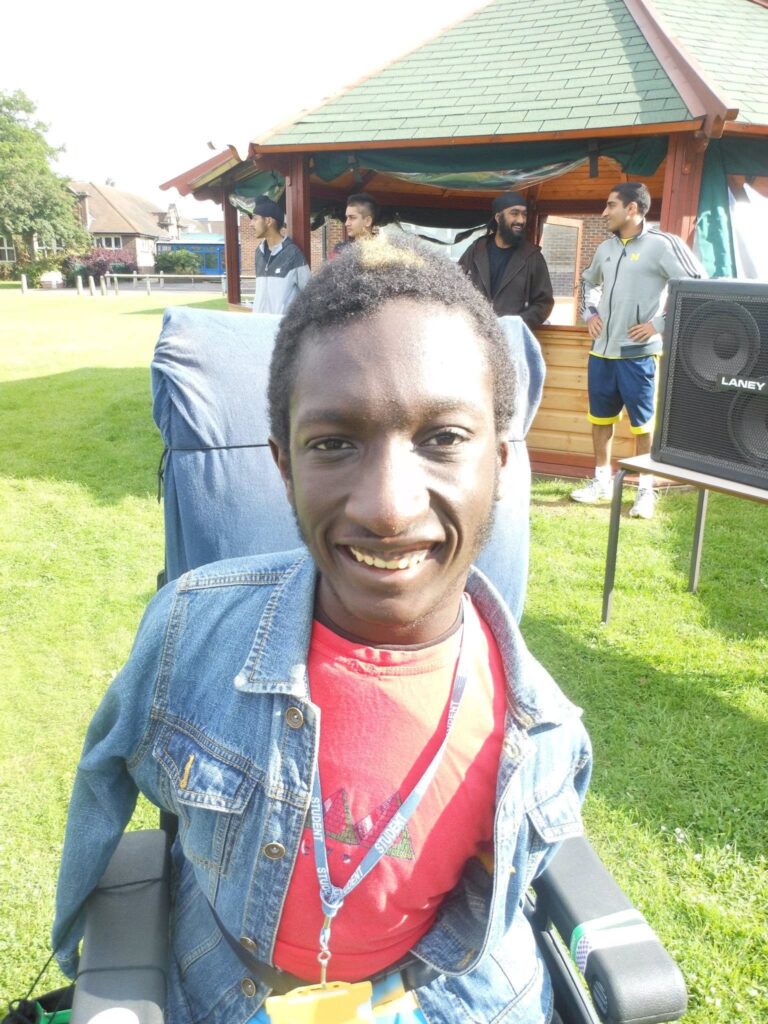
When I was at school, there was a period when I genuinely didn’t want to go to my science lessons. Not because of the subject itself, but because I had a teacher who would speak to everyone in the classroom except me.
Whenever she wanted to ask me something, she would turn to my learning support assistant instead. Even when I answered the question myself, she would hardly acknowledge me. It was such a strange feeling, sitting there listening to someone talk about me as though I wasn’t even in the room.
What made it even stranger was that I attended a mainstream school which had the facilities and learning support in place for students with disabilities like myself. I generally felt included, and my other teachers spoke to me directly. Yet in this one classroom, I felt completely overlooked. Eventually, I began questioning whether I was even meant to be there, and I didn’t have the confidence at the time to say anything about it.
Then one day, a learning support assistant I got on particularly well with came along to the lesson. She was someone who always made sure I was involved in what was happening. Back then, I didn’t really think about inclusion as a concept. I just knew when someone made me feel part of something, and she was very good at that.
When the science teacher started speaking to her instead of me, she wasn’t having any of it. She challenged the teacher there and then.
I can’t remember exactly what was said, but I remember other students turning around to see what was going on. It was a little embarrassing, but also quite a moment to witness. Here was someone challenging a teacher because of how I was being treated, something I hadn’t felt confident enough to do myself.
The learning support assistant also raised the issue with senior staff, and let’s just say I think the teacher had a bit of a telling-off!
The difference afterwards was quite something. Suddenly, she was speaking to me directly, involving me in lessons and even saying hello whenever we passed each other in the corridor. It was almost a complete turnaround, which felt a little strange at first. But I was finally able to relax in those lessons and feel like I belonged there.
Something I’ve come to appreciate more as I’ve got older is that other learning support assistants had been with me during those lessons, but nobody had challenged what was happening, at least not that I knew of. That doesn’t particularly mean they didn’t care. Perhaps they hadn’t noticed, or perhaps they didn’t feel comfortable raising the issue themselves. It’s worth remembering that the people supporting students also need to feel able to speak up when something isn’t right.
Looking back, my school already had the accessibility features and support I needed to be there. The issue wasn’t getting into the classroom. It was how I was being treated once I was in it.
That experience has also influenced how I approach speaking up today. Confrontation isn’t something I do. I’d much rather send an email or speak to someone privately once I’ve had time to process things. But I’ve learnt that speaking up doesn’t have to look the same for everyone, and there are different ways to make yourself heard.
I can’t remember what we were learning in science that day, but I still remember that learning support assistant speaking up for me. She didn’t just help change how one teacher treated me. She helped me recognise that being overlooked wasn’t something I had to simply accept.
Support for Every Learner
Discover how SEND Tutoring supports students with a wide range of needs, including autism, ADHD, dyslexia, PDA, SEMH, epilepsy, and more.
Resources and Insights
Stay Connected
Follow us on social media for updates, tips, and stories from our SEND community.
About the author
Ella Jones
If you’re looking for support for a child or young person with special educational needs or a disability, book a free call with us today and find out how we can help.
Share this
Podcast, blog and more
More news and resources from SEND Tutoring

Support
Nov 20
9 Min Read
From EHCPs to School Avoidance: What Can You Learn at Sunshine Academy?
With around 300 courses and webinars covering everything from SEND rights to inclusive teaching, Sunshine Academy is bringing specialist knowledge to parents, educators and young people. We spoke to Emma Tooby-Johnstone from Sunshine Support to find out more.
SEN Stories
Nov 20
4 Min Read
Being in an Inclusive Classroom Doesn’t Always Mean Feeling Included
Having the right facilities and support in place is one thing, but being acknowledged, respected and treated as an individual is another. In this guest article for SEND Tutoring, disability advocate Isaac Harvey MBE explores the difference between being present in a classroom and truly belonging in it.
SEN Stories
Nov 20
7 Min Read
More Than Words: Making Reading Accessible for Everyone
Every Cherry Publishing is challenging the idea that everyone should experience books in the same way. From simplified text and dyslexia-friendly fonts to helpful symbols, audiobooks and signed videos, its approach is built around a simple principle: readers should have options.